Gudi Padwa
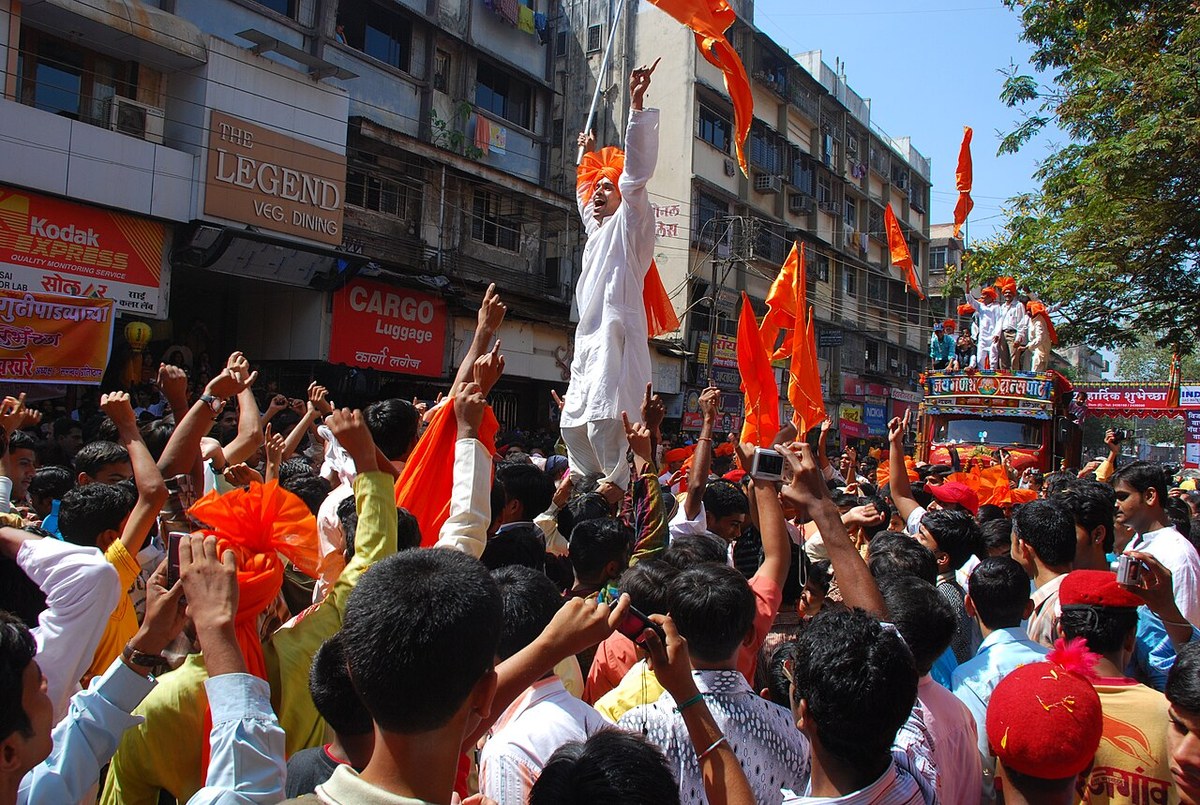
Gudi Padwa is a spring festival marking the start of the lunisolar new year for Marathi and Konkani Hindus. It is celebrated in and around Maharashtra, Goa, and Daman at the start of Chaitra, the first month of the lunisolar Hindu calendar. The festival is characterised by colourful floor decorations called rangoli, a special gudi dhvaja, which is a sari or dhoti or other piece of cloth garlanded with flowers, mango, and neem leaves, and a sugar crystal garland called gathi, topped with upturned silver or copper vessels. The celebration also includes street gatherings, dancing, and festive foods. In Maharashtra, the first day of the bright phase of the moon is called guḍhī pāḍwā (Marathi: गुढी पाडवा), pāḍvo (Konkani: पाडवो); pāḍya (Kannada: ಪಾಡ್ಯ); pāḍyami (Telugu: పాడ్యమి). Konkani Hindus variously refer to the day as sausāra pāḍavo or sausāra pāḍyo (सौसार पाडवो and सौसार पाडयो, respectively). Kannada Hindus in Karnataka refer to it as Yugādi/Ugadi (ಯುಗಾದಿ), while Telugu Hindus celebrate the same occasion as Ugadi (ఉగాది). Sindhi people celebrate the day as Cheti Chand, and Kashmiri Pandits celebrate this day as Navreh. However, this is not the universal new year for all Hindus. For some, such as those in and near Gujarat, the new year festivities coincide with the five-day Diwali festival, also known as Bestu Varas.
Origins
Gudi means 'flag'; according to Kittel, the term is of South Indian origin. The word pāḍavā is derived from the Sanskrit word pratipad for the first day of each fortnight in a lunar month, or the first day on which the moon appears after the "new moon" day (amāvāsya), and the first day after the full moon. A Gudi is also hoisted on this occasion, gives this festival its name. The term padva or padavo is also associated with Balipratipada.
Text adapted from Wikipedia, available under the CC BY-SA 4.0 licence.