
Feast of the Three Kings
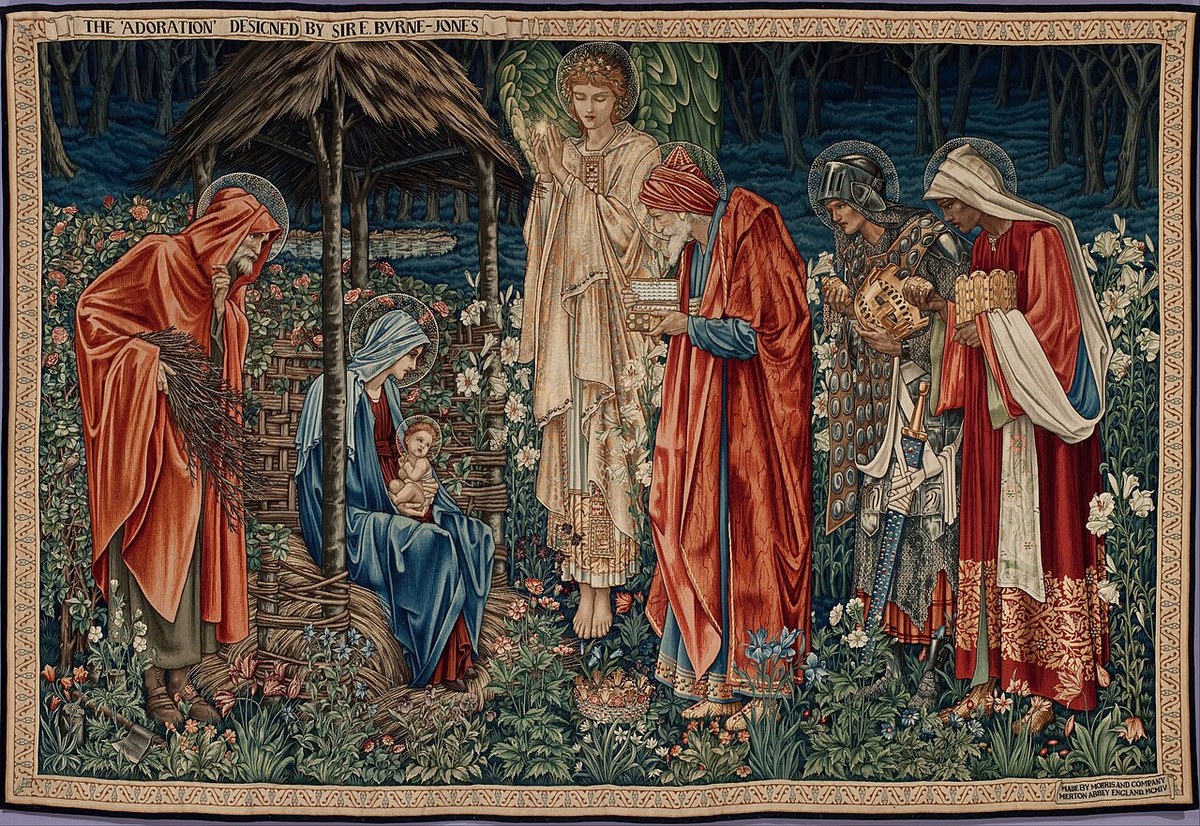
Epiphany ( ə-PIF-ə-nee), also known as Theophany in Eastern Christian tradition, is a Christian feast day commemorating the visit of the Magi, the baptism of Jesus, and the wedding at Cana. In Western Christianity, the feast commemorates principally (but not solely) the visit of the Magi to the Christ Child, and thus Jesus Christ's physical manifestation to the Gentiles. It is sometimes called Three Kings' Day, and in some traditions celebrated as Little Christmas. Moreover, the feast of the Epiphany, in some denominations, also initiates the liturgical season of Epiphanytide. Eastern Christians, on the other hand, commemorate the baptism of Jesus in the River Jordan, seen as his manifestation to the world as the Son of God, and celebrate it as the Feast of the Epiphany or of the Theophany. The traditional site of the ministry of John the Baptist is in Al-Maghtas in Jordan, with the baptism of Jesus once marked in Byzantine times by a cross in the middle of the Jordan River, between the Jordanian site and Qasr al-Yahud in the West Bank. The traditional date for the feast is January 6. However, since 1970 the celebration has been held in some countries on the Sunday after January 1. Those Eastern Churches that are still following the Julian calendar observe the feast on what, according to the internationally used Gregorian calendar, is 19 January, because of the current 13-day difference between the Julian and Gregorian calendars.
Origins
The word Epiphany is from Koine Greek ἐπιφάνεια, epipháneia, meaning manifestation or appearance. It is derived from the verb φαίνειν, phainein, meaning 'to appear'. In classical Greek it was used for the appearance of dawn, of an enemy in war, but especially of a manifestation of a deity to a worshipper (a theophany). In the Septuagint the word is used of a manifestation of the God of Israel (2 Maccabees 15:27). In the New Testament the word is used in 2 Timothy 1:10 to refer either to the birth of Christ or to his appearance after his resurrection, and five times to refer to his Second Coming. Alternative names for the feast in Greek include τα Θεοφάνια (ta Theophánia; 'Theophany'; a neuter plural rather than feminine singular), η Ημέρα των Φώτων (i Iméra ton Fóton; 'The Day of the Lights'; modern Greek pronunciation), and τα Φώτα (ta Fóta, 'The Lights'). In Egypt, it is called Eid al-Ghitas (Arabic: عيد الغِطاس).
How It's Celebrated
Epiphany is celebrated by both the Eastern and Western Churches, but a major difference between them is precisely which events the feast commemorates. For Western Christians, the feast primarily commemorates the coming of the Magi, with only a minor reference to the baptism of Jesus and the miracle at the wedding at Cana. Eastern churches celebrate the baptism of Christ in the Jordan. In both traditions, the essence of the feast is the same: the manifestation of Christ to the world (whether as an infant or in the Jordan), and the Mystery of the Incarnation. The miracle at the wedding at Cana is also celebrated during Epiphany as a first manifestation of Christ's public life. In some Churches, the feast of the Epiphany initiates the Epiphany season, also known as Epiphanytide. === Catholic Church === In the Catholic Church, Epiphany is either observed on the traditional fixed date of January 6, or it is transferred to the Sunday between January 2 and January 8. Most dioceses in the United States observe the latter. In each system, the date of Epiphany affects the dates of other feasts: Where Epiphany is always celebrated on January 6, the Feast of the Baptism of the Lord is celebrated the following Sunday. During years where there are two Sundays between Christmas and Epiphany, the second is known as the "Second Sunday after Christmas". Where Epiphany is on a moveable date and does not occur on January 6, it is moved earlier to replace the Second Sunday after Christmas in years where it would have occurred; otherwise it is moved later to the following Sunday, and displaces the Feast of the Baptism to the following Monday. Currently, Epiphany is considered part of Christmas Time, which runs from First Vespers (Evening Prayer I) of Christmas up to and including the Sunday after Epiphany, with Ordinary Time beginning on the following Monday. Some regions and especially some communities celebrating the Tridentine Mass extend the season to as many as forty days, ending Christmastide traditionally on Candlemas (February 2). On the Feast of the Epiphany in some parts of central Europe the priest, wearing white vestments, blesses Epiphany water, frankincense, gold, and chalk. The chalk is used to write the initials of the three magi (traditionally, Caspar, Melchior, and Balthasar), over the doors of churches and homes. The initials may also be interpreted as the Latin phrase, Christus mansionem benedicat (may Christ bless the house). According to ancient custom, the priest announced the date of Easter on the feast of Epiphany. This tradition dated from a time when calendars were not readily available, and the church needed to publicize the date of Easter, since many celebrations of the liturgical year depend on it. The proclamation may be sung or proclaimed at the ambo by a deacon, cantor, or reader either after the reading of the Gospel or after the postcommunion prayer. The Roman Missal thus provides a formula with appropriate chant (in the tone of the Exsultet) for proclaiming on Epiphany, wherever it is customary to do so, the dates in the calendar for the celebration of Ash Wednesday, Easter Sunday, Ascension of Jesus Christ, Pentecost, the Body and Blood of Christ, and the First Sunday of Advent that will mark the following liturgical year. === Protestant churches === Lutheran, Anglican, Moravian, Methodist and United Protestant congregations, along with those of other denominations, may celebrate Epiphany on January 6, on the following Sunday within the Epiphany week (octave), or at another time (Epiphany Eve January 5, the nearest Sunday, etc.) as local custom dictates.
Text adapted from Wikipedia, available under the CC BY-SA 4.0 licence.