
Easter
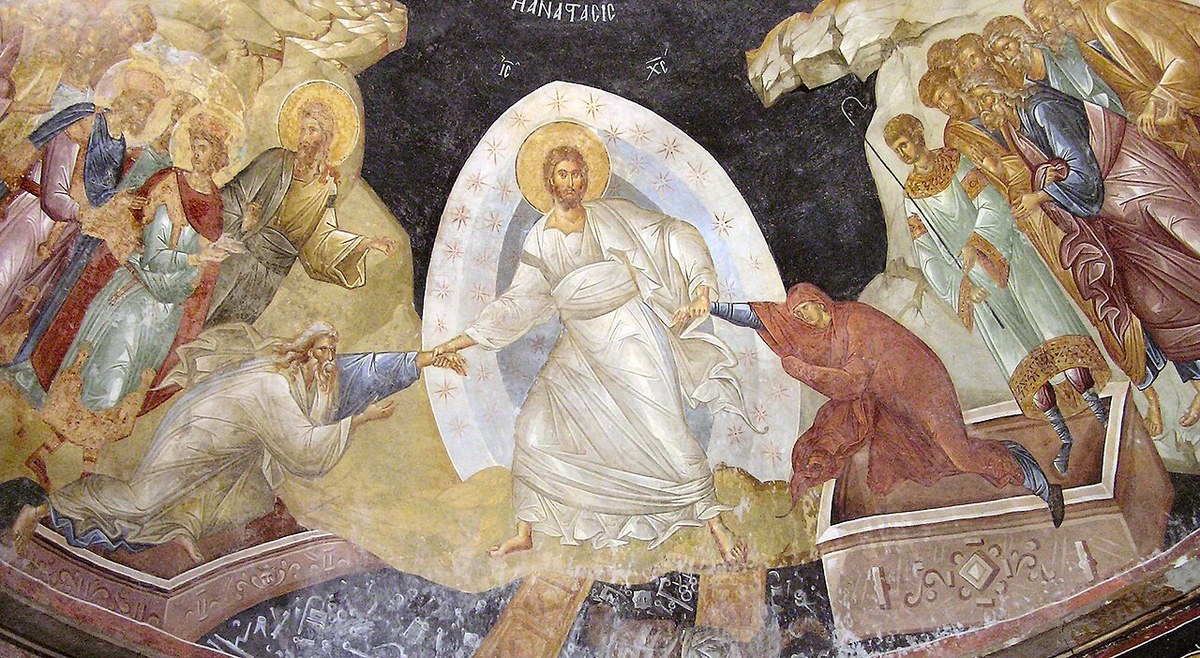
Easter, also called Pasch () or Pascha or Resurrection Sunday, is a Christian festival and cultural holiday commemorating the resurrection of Jesus from the dead, described in the Bible's New Testament as having occurred on the third day of his burial following his crucifixion by the Romans at Calvary c. 30 AD. It is the culmination of the Passion of Jesus, preceded by Lent (or Great Lent), a 40-day period of fasting, prayer, and penance. Easter-observing Christians commonly refer to the last week of Lent, before Easter, as Holy Week. In Western Christian denominations that observe the liturgical calendar, Holy Week begins on Palm Sunday (marking the entrance of Jesus in Jerusalem), includes Spy Wednesday (on which the betrayal of Jesus is mourned), and contains the days of the Easter Triduum including Maundy Thursday, commemorating the Maundy and Last Supper, as well as Good Friday, commemorating the crucifixion and death of Jesus. In Eastern Christianity, the same events are commemorated with the names of days all starting with "Holy" or "Holy and Great", and Easter itself might be called Great and Holy Pascha. In both Western and Eastern Christianity, Eastertide—also known as the Easter or Paschal season—begins on Easter Sunday and continues for seven weeks, concluding on the 50th day, Pentecost Sunday.
Origins
The modern English term Easter, cognate with German Ostern, developed from an Old English word that usually appears in the form Ēastrun, Ēastron, or Ēastran; but also as Ēastru, Ēastro; and Ēastre or Ēostre. In the 8th century AD, Anglo-Saxon monk and scholar Bede recorded in his The Reckoning of Time that Ēosturmōnaþ (Old English for 'Month of Ēostre', translated in Bede's time as "Paschal month") was an English month, corresponding to April, which he says "was once called after a goddess of theirs named Ēostre, in whose honour feasts were celebrated in that month". In Latin and Greek, the Christian celebration was, and still is, called Pascha (Greek: Πάσχα), a word derived from Aramaic פסחא (Paskha), cognate to the Hebrew פֶּסַח (Pesach). The word originally denoted the Jewish festival known in English as Passover, commemorating the Israelite Exodus from slavery in Egypt. As early as 50 AD, Paul the Apostle, writing from Ephesus to the Christians in Corinth, applied the term to Christ. It is unlikely that the Ephesian and Corinthian Christians were the first to hear Exodus 12 interpreted as speaking about the death of Jesus, not just about the Jewish Passover ritual. In most languages, the feast is known by names derived from the Greek and Latin Pascha. Pascha is also a name by which Jesus himself is remembered in the Orthodox Church, especially in connection with his resurrection and with the season of its celebration. Others call the holiday "Resurrection Sunday" or "Resurrection Day", after the Greek Ancient Greek: Ἀνάστασις (Anastasis, 'Resurrection').
How It's Celebrated
=== Western Christianity === The Easter festival is kept in many different ways among Western Christians. The traditional, liturgical observation of Easter, as practised among Roman Catholics, Lutherans, and some Anglicans begins on the night of Holy Saturday with the Easter Vigil which follows an ancient liturgy involving symbols of light, candles and water and numerous readings from the Old and New Testament. Services continue on Easter Sunday and in a number of countries on Easter Monday. In parishes of the Moravian Church, as well as some other denominations such as the Methodist Churches, there is a tradition of Easter sunrise services, often starting in cemeteries in remembrance of the biblical narrative in the Gospels, or other places in the open where the sunrise is visible. In some traditions, Easter services typically begin with the Paschal greeting: "Christ is risen!" The response is: "He is risen indeed. Alleluia!" === Eastern Christianity === Eastern Orthodox, Eastern Catholics and Byzantine Rite Lutherans have a similar emphasis on Easter in their calendars, and many of their liturgical customs are very similar. Preparation for Easter begins with the season of Great Lent, which begins on Clean Monday. While the end of Lent is Lazarus Saturday, fasting does not end until Easter Sunday. The Orthodox service begins late Saturday evening, observing the Jewish tradition that evening is the start of liturgical holy days. The church is darkened, then the priest lights a candle at midnight, representing the resurrection of Jesus Christ. Altar servers light additional candles, with a procession which moves three times around the church to represent the three days in the tomb. The service continues early into Sunday morning, with a feast to end the fasting. An additional service is held later that day on Easter Sunday. === Non-observing Christian groups === Many Puritans saw traditional feasts of the established Anglican Church, such as All Saints' Day and Easter, as abominations because the Bible does not mention them. Conservative Reformed denominations such as the Free Presbyterian Church of Scotland and the Reformed Presbyterian Church of North America likewise reject the celebration of Easter as a violation of the regulative principle of worship, based on what they see as its non-Scriptural origin. Easter is rejected by groups such as the Restored Church of God, who claim it originated as a pagan spring festival adopted by the Roman Catholic Church. Jehovah's Witnesses maintain a similar view, observing a yearly commemorative service of the Last Supper and the subsequent execution of Christ on the evening of Nisan 14 (as they calculate the dates derived from the lunar Hebrew calendar). It is commonly referred to by many Witnesses as simply "The Memorial". Jehovah's Witnesses believe that such verses as Luke 22:19–20 and 1 Corinthians 11:26 constitute a commandment to remember the death of Christ, though not the resurrection. Members of the Religious Society of Friends (Quakers), as part of their historic testimony against times and seasons, do not celebrate or observe Easter or any traditional feast days of the established Church, believing instead that "every day is the Lord's Day", and that elevation of one day above others suggests that it is acceptable to do un-Christian acts on other days. During the 17th and 18th centuries, Quakers were persecuted for this non-observance of Holy Days.
Text adapted from Wikipedia, available under the CC BY-SA 4.0 licence.